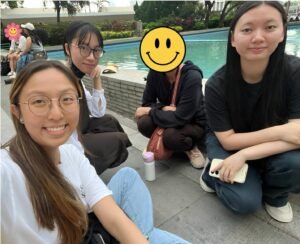
APMM has hosted interns from City University of Hong Kong named Deng Jiawen, Ashley Kam and Lydia Li. For four months, they were immersed with the campaigns and advocacies of the organization and also integrated with migrant workers in Hong Kong.
As part of their internship, they wrote an article about the culture shock experienced by domestic migrant workers in Hong Kong. Based on their integration with the migrant community, they describe the experience of migrant workers on their admiration of Hong Kong and also their challenges in trying to fit-in to the city.
Through APMM’s internship program, the organization hopes that the interns learn the struggles of migrant workers, and also be able to campaign for the rights of the migrant workers after finishing their program.
Here is the article they wrote:
“You Can’t Let Them See You Rest”: Domestic Workers`Experience On Cultural Shock, Coping, and the Fight for Belonging in Hong Kong
Written by Deng Jiawen, Ashley Kam, and Lydia Li, APMM interns
Hong Kong is home to over 300,000 migrant domestic workers, who are always trying their best to work and live in a city far from home. While wages and policy inequalities are in heated discussions, there also exists a nuanced but significant influence of cultural shock in daily life. How do these workers navigate it, and how does this cultural friction shape their mental health, their relationship with employers and their sense of integration? To better understand these questions, we interviewed several migrant domestic workers about their lived experiences.
Arrival: Impressions
Before stepping foot in Hong Kong, most workers gathered information through Google searches, friends and relatives already working in the city, and comparisons with other destination countries such as Singapore, Malaysia, and Saudi Arabia. The decision to come to Hong Kong was typically driven by two factors: better salaries and the city’s reputation as an organized, efficient metropolis. Upon arrival, positive impressions often centered on these expectations—workers noted the city’s orderliness, fair pay, and what they perceived as stronger government protections.
Rose, a former elementary teacher in the Philippines and a former domestic worker in the Middle East, has been working in Hong Kong for almost two years. Recalling the moment she fell ill, Rose thought that the hospital infrastructure was impressive and the staff’s attitude was remarkably good, a stark contrast to healthcare experiences elsewhere.
Many also felt that the relationship between employer and employee seemed more equal than the information they had received about other countries. Yet, as the following sections will show, this initial sense of order and fairness does not mean life here is totally peaceful.
The Work-Culture Overlap: When Shock Reflects Structural
One of the most disorienting shifts for migrant domestic workers is the expectation that finishing tasks early does not mean finishing work. As Rose pointed out: “In the Philippines, we finish tasks quickly so we can rest. But here, you can’t do that. Even if you finish cleaning early, you have to find other work.” She added: “If the floor is cleaned, maybe clean it again; if dishes are washed, maybe arrange them in a tidier way–just do not let employers see you are relaxing even if you deserve it, but always make yourself busy to avoid any blame.”
This is not merely an employer’s personal attitude but a reflection of Hong Kong’s broader work culture of intensity where visible productivity is expected at all times, but such expectations can become infringement of rights when they erase the boundary between reasonable work and overwork.
Similarly, cultural traditions like Chinese New Year can carry a double meaning. On the positive side, red packets given as bonuses acknowledge a worker’s effort. Let, an experienced worker who has worked in Hong Kong for more than 20 years, said that the red pocket is a 13th-monthly pay for her at the end of the year. However, the same holiday often brings excessive work—such as days of cooking and hosting—without documented hours or overtime pay. As Rose reported, her employer has been ambiguous about new year`s exact working and rest hours in the contract, and little compensation are made for holiday works; Sheryl, a domestic worker from the Philippines who previously worked in Malaysia and has been in Hong Kong for about one year, also noted that this phenomenon is common in other places as well: “ In Malaysia, during Chinese New Year, I had to cook every day for many days because so many people came over. It was very, very tiring”. What should be a colorful and joyful tradition risks becoming an excuse for ignoring necessary regulations and rights protection.
Under Hong Kong’s standard employment contract for foreign domestic workers, the employer is required to provide free yet mandatory live-in accommodation with family. However, this also means the worker’s home is their workplace with no legal distinction between off duty hours and on call time. With no physical or temporal separation from the workplace, there is little opportunity to learn the local language, explore the city, or build independent social ties to integrate into the city`s culture.
The cultural experiences ultimately return us to a reflection on power and structural barriers: the very design of domestic work—live-in, on-call, culturally embedded—systemically disempowers workers under the guise of tradition or efficiency.
Coping Mechanisms: From Coping to Collective Action
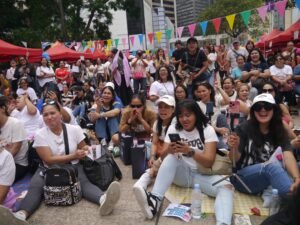
Photo: Migrante Hong Kong
Faced with these structural challenges, workers develop a range of coping strategies that move from individual endurance to collective action.
At the most basic level, respecting diverse beliefs—whether religious practices or dietary customs—offers small but meaningful spaces of dignity. As Sherly observed: “In Hong Kong, they have a lot of gods, a lot of cultures and religions. That is the number one—we must do that, respect their belief. ” This is the key for the embracement of diverse cultures.
Community and friendship become lifelines, with fellow domestic workers providing emotional support, practical advice and shared laughter on days off. Rose has told us a heart-warming story: she once has a friend who faced severe abuses and felt very helpless, and withunder Rose`s help for accessing legal help resources and emotional support, she successfully report the case and find a shelter to reside. Recognizing friendship and culture identity with home culture and communities does not mean segregating from local culture, but being prepared for harmonizing with more diverse environment with stronger solidarity.
A critical role also belongs to NGOs and unions, which transform coping into organizing. These organizations offer legal aid, know-your-rights workshops, language classes, and platforms to voice grievances without fear of retaliation. They shift the narrative from silent smiling—the performance of gratitude that conceals exhaustion—to collective bargaining and policy advocacy. In this sense, coping is no longer just about surviving the present but about building the power to change the future.
Conclusion: Beyond Economic Survival – Toward Cultural Belonging

Photo: Migrante Hong Kong
As Rose wisely concluded: “If you are willing to adjust, you need to be open-minded. This is new.” With a background in teaching and domestic work across the Philippines, Saudi Arabia, and now Hong Kong—where she has lived for nearly two years—Rose is no stranger to cultural adjustment.
Her words capture the genuine effort that migrant workers make every day to adapt to a different culture, language, and rhythm of life.
However, adjustment should never be one-sided. Policies and employers must also adapt—by enforcing clear working hours, respecting rest days, and acknowledging that live-in work does not mean 24-hour availability. True harmony does not come from a worker’s endless flexibility but from mutual respect. When both sides recognize each other’s humanity, the goal shifts from mere survival to genuine belonging. Only then can Hong Kong move from a place where shock becomes structural to one where dignity becomes standard.