

Malaysia Must End Syndicate-Style Recruitment and Adopt Binding Bilateral Labor Agreements
Tenaganita strongly supports the call made by former MP Charles Santiago urging the Malaysian government to adopt a binding bilateral labor agreement with Bangladesh to end syndicate-controlled recruitment. This call reflects what Tenaganita and other rights-based organizations have long advocated: the current system of labor migration is deeply flawed, non-transparent, and exploitative.
The existing Memoranda of Understanding (MOUs) signed with Bangladesh and other source countries are non-binding and lack enforceability. Crafted without meaningful consultation with civil society, trade unions, or migrant worker representatives, they have opened the door for a handful of politically connected agencies to monopolize recruitment under the guise of legality. These syndicates are often awarded quotas without proper due diligence, even when they have no actual business operations or financial capacity. This unchecked power has led to massive exploitation, including the collection of exorbitant recruitment fees of up to RM25,000, leaving thousands of workers stranded, jobless, and in debt upon arrival.
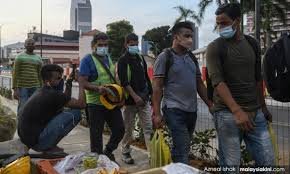
Between January 2022 and September 2024 alone, over 351,000 Bangladeshi workers entered Malaysia legally with valid documentation, but many were left without employment, forced to survive in squalid conditions, and exposed to arrest and deportation. The case of Meranti Binamas, in which 44 workers had to seek redress for unpaid wages, is further proof that legally sanctioned recruitment does not guarantee protection when governance is absent and accountability mechanisms are weak.
This is not an isolated issue. It is a systemic crisis, perpetuated by vested political and financial interests and enabled by the lack of political will, transparency, and enforcement. Until now, syndicate-styled recruitment remains the norm, prioritising profits over the rights and dignity of migrant workers.
Tenaganita calls on the Government of Malaysia to immediately:
- Dismantle the syndicate-style recruitment model, and hold all complicit parties, including enforcement officers and recruitment agents, criminally accountable.
- Transition to binding bilateral labour agreements that are rights-based, enforceable, and developed through multi-stakeholder consultations, including with civil society and worker representatives.
- Ensure that all bilateral agreements include clear provisions on ethical recruitment, job guarantees, grievance redress mechanisms, wage protection, and oversight structures.
We further urge that such binding bilateral agreements become standard practice not only with Bangladesh, but with all source countries including Nepal, Indonesia, India, Myanmar, and Cambodia. Without reform, Malaysia faces severe international repercussions, including increased scrutiny for forced labour, trade restrictions, and reputational damage among global brands under pressure to clean up their supply chains.
Malaysia risks becoming a hub for modern-day slavery if these systemic failures are not addressed. It is not enough to acknowledge the problem, we must act with urgency, justice, and integrity. Justice for migrant workers must no longer be the exception. It must be the standard.
There is a common saying that migrant workers are only found in the so-called “3D jobs”the dirty, dangerous, and demeaning. But Malaysia has the opportunity to redefine that 3D: to stand for Dignity, Decorum, and Decent work.
We can begin by entering into binding bilateral labour agreements that honour and protect the very people who build our nation.